Tuesday, October 2, 2012

STAGE 4 : Workshop Experimentations - Week 8 Experimentations

After further discussion and feedback, I decided to go back to triangle shape for its aesthetics, stability as well as the fact that it requires less material to fabricate, which I think will definitely help with keeping the weight as low as possible. I will not be using my previous stacking method either since it will considerably reduce strength.

I am not as concerned with weight for this project since I am using polypropylene, the only thing that really worries me is the strength.

Though most of my mock ups are able to support my laptop (which weight 50x more than the mock up itself, probably even more), its pressure points are more or less well distributed. It's a different case when a person is sitting on it.

 Ideas for strength and making the stool


Having more structure inside the stool will not allow it to stack later,  that is why it needs to be cut down like the drawing below


Sadly, the patterns here will be more than 2400mm in length, which is longer than the standard pp sheet size. I will have to size it down while keeping or maybe improving the strength aspects.

Even so, I made the model anyway

The pattern with cutout bottom to enable stacking

Seamless tabs for better aesthetics

These tabs located right outside the circle enables seamless joint

Tuesday, September 25, 2012

STAGE 3 : Design Review - Week 7 Model and 1:1 Drawing

After deciding that the Folding Circle concept is the one to go with, I made some more mock ups


First try


1:5 scale model
Experimenting a bit with the seats, considering it to be a different material


Another experiment with triangles and weird shaped inside circles


 1:1 scale elevation drawing (compared with a dining table and chair)
The overall measurement is 400x400x400 (wxlxh)


Monday, August 20, 2012

STAGE 1 : Research Part A - Lightweight Materials

Research Part A - Lightweight Materials

-->
Polypropylene Sheets

source: http://www.mindsetsonline.co.uk/images/Polyprop.jpg
Related Process:             
Weaving, curved bending, bending and thermoforming

Typical properties of polypropylene
ASTM or UL test
Property
Unmodified resin
PHYSICAL
D792
Specific gravity
0.905
D792
Specific volume (in.³/lb.)
30.8-30.4
D570
Water absorption, 24 hours, 1/8 inch thick (%)
0.01-0.03
MECHANICAL
D638
Tensile strength (psi)
5,000
D638
Elongation (%)
10-20
D638
Tensile modulus (10~5 psi)
1.6
D790
Flexural modulus (10~5 psi)
1.7-2.5
D256
Impact strength, izod (ft-lb/in. of notch)
0.5-2.2
D785
Hardness, Rockwell R
80-110
THERMAL
C177
Thermal conductivity (10~4 cal-cm/sec-cm~2-°C)
2.8
D696
Coefficient of thermal expansion (10~5 in./in.-°F)
3.2-5.7
D648
Deflection temperature (°F)
At 264 psi
At 66 psi

125-140
200-250
UL94
Flammability rating
HB
ELECTRICAL
D149
Dielectric strength (V/mil) short time, 1/8-in. thick
500-660
D150
Dielectric constant At 1kHz
2.2-2.6
D150
Dissipation factor At 1kHz
0.0005-0.0018
D257
Volume resistivity (ohm-cm) At 73°F, 50% RH
10~17
D495
Arc resistance(s)


Balsa Wood

source: http://www.towerhobbies.com/products/towr1305/towr1305_500.jpg
 
Related Process:
Bending through laminating, one sided moisture/heat, chemicals and long soak
 
-->


Jute

source:  http://mergemt.com/images/jute%20rope.jpg

Related Process:            
Weaving (strips/thread), tie around a skeleton

Mechanical Properties

Quantity                       
Value                   
Unit
Young's modulus
300 - 780
MPa
Tensile strength
453 - 550
MPa
Elongation
0.8 - 2
%

Physical Properties

Quantity                       
Value                   
Unit
Density
1440 - 1460
kg/m3
Water absorption
12 - 35
%


Steel Wires

source: http://www.cccme.org.cn/FileServer_Upload/i_supply/2010/6/2/201012251752545131_124704674.jpg

Related Process:
Bending, thermoforming, weaving, welding

General Properties of Steels:

Properties
Carbon Steels
Alloy Steels
Stainless Steels
Tool Steels
Density (1000 kg/m3)
7.85
7.85
7.75-8.1
7.72-8.0
Elastic Modulus (GPa)
190-210
190-210
190-210
190-210
Poisson's Ratio
0.27-0.3
0.27-0.3
0.27-0.3
0.27-0.3
Thermal Expansion (10-6/K)
11-16.6
9.0-15
9.0-20.7
9.4-15.1
Melting Point (°C)


1371-1454

Thermal Conductivity (W/m-K)
24.3-65.2
26-48.6
11.2-36.7
19.9-48.3
Specific Heat (J/kg-K)
450-2081
452-1499
420-500

Electrical Resistivity (10-9W-m)
130-1250
210-1251
75.7-1020

Tensile Strength (MPa)
276-1882
758-1882
515-827
640-2000
Yield Strength (MPa)
186-758
366-1793
207-552
380-440
Percent Elongation (%)
10-32
4-31
12-40
5-25
Hardness (Brinell 3000kg)


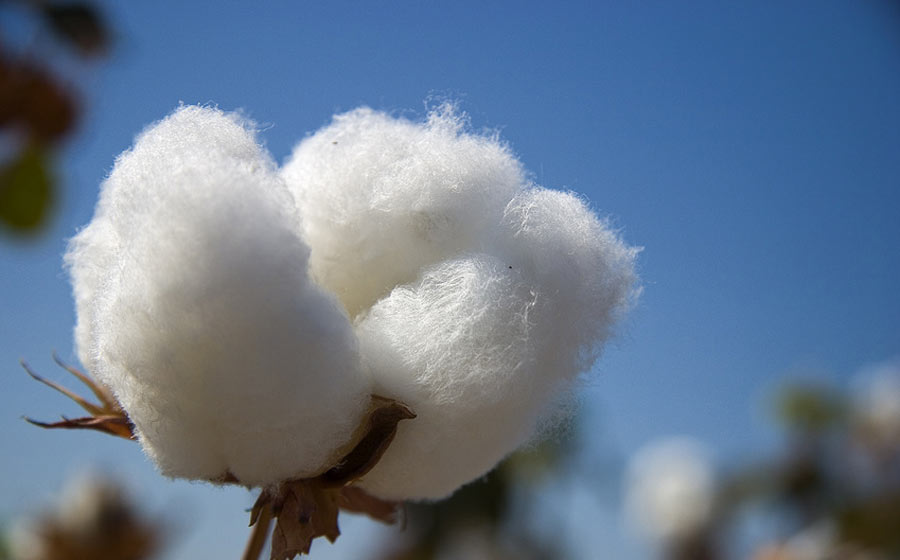
Cotton

source: http://oecotextiles.files.wordpress.com/2010/06/cotton-boll.jpg

Related Process: 
Weaving, upholstered

Mechanical Properties

Quantity                            
Value                    
Unit
Young's modulus
5300 - 8000
MPa
Tensile strength
400 - 850
MPa
Elongation
3 - 8
%

Physical Properties

Quantity                            
Value                    
Unit
Melting temperature
255 - 255
°C
Service temperature
-100 - 160
°C
Density
1540 - 1540
kg/m3
Water absorption
20 - 100
%


Felt

source: http://i-cdn.apartmenttherapy.com/uimages/la/051909-felt04.jpg

Related Process: 
Weaving, upholstered

Mechanical Properties

Quantity                             
Value             
Unit
Tensile strength
2.7 - 5.5
MPa
Elongation
2 - 28
%

Physical Properties

Quantity                             
Value             
Unit
Thermal conductivity
0.5 - 1.5
W/m.K

Bibliography:

-->
-->
-->
http://www.matbase.com/material/fibres/natural/felt/properties
http://www.matbase.com/material/fibres/natural/cotton/properties